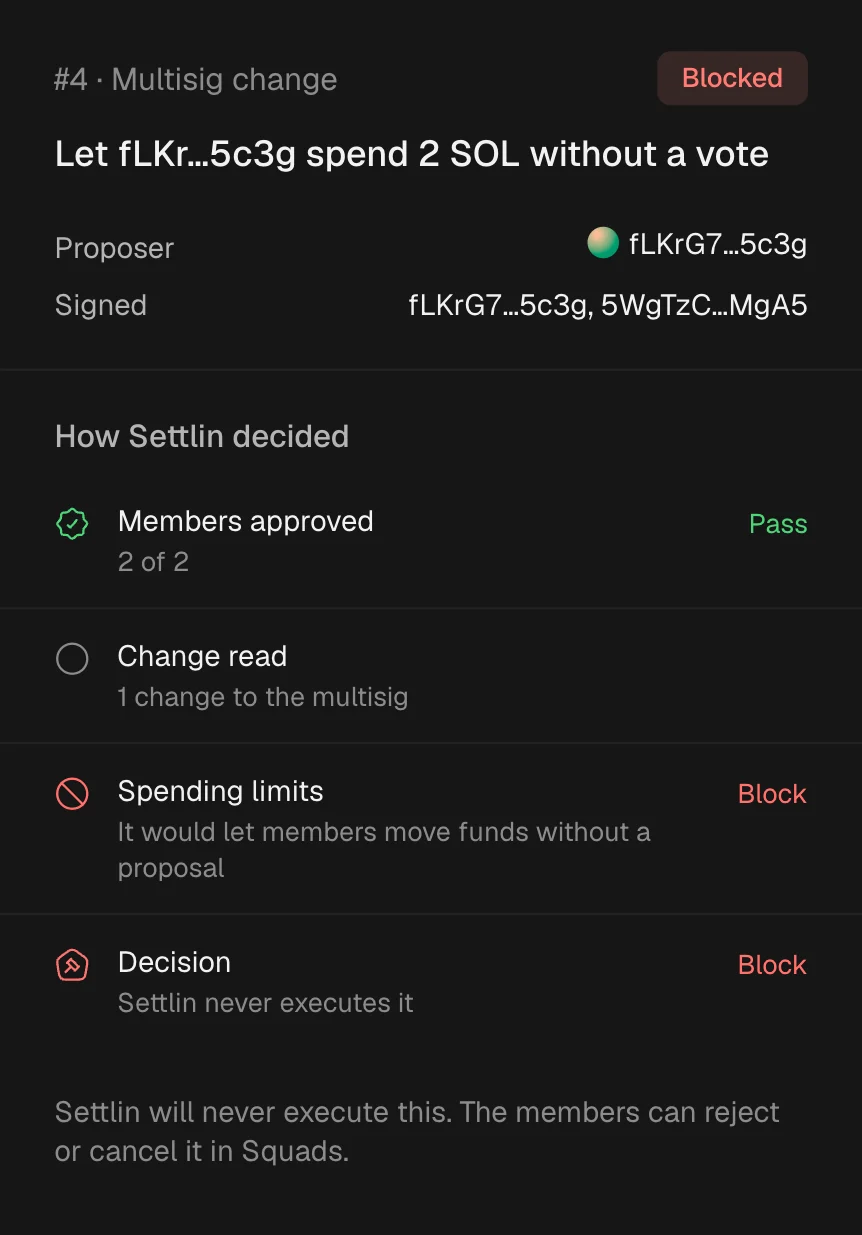
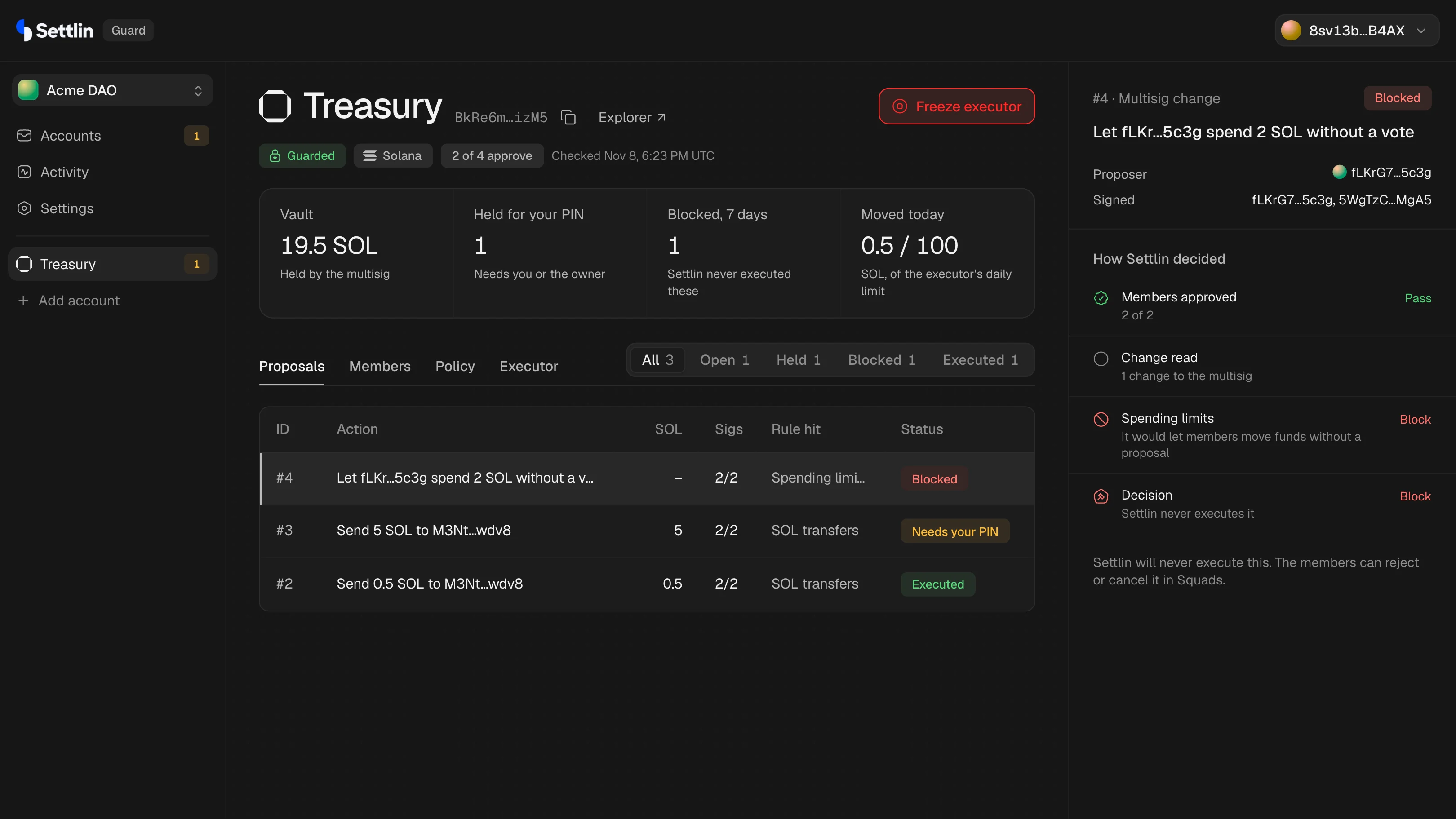
See why it was held. Every proposal shows what Settlin checked, in order, and which rule decided it.
Settlin Guard sits between your multisig and the chain. Signers sign as they always have, and a transaction only lands if it passes your rules.
Works with the multisigs teams already run
The biggest multisig drains all had enough signatures. The signers were tricked or hacked, and the multisig did what it was told.
Publicly reported losses
$1.5B
$285M
$235M
$53M
0
Bugs in the multisig itself
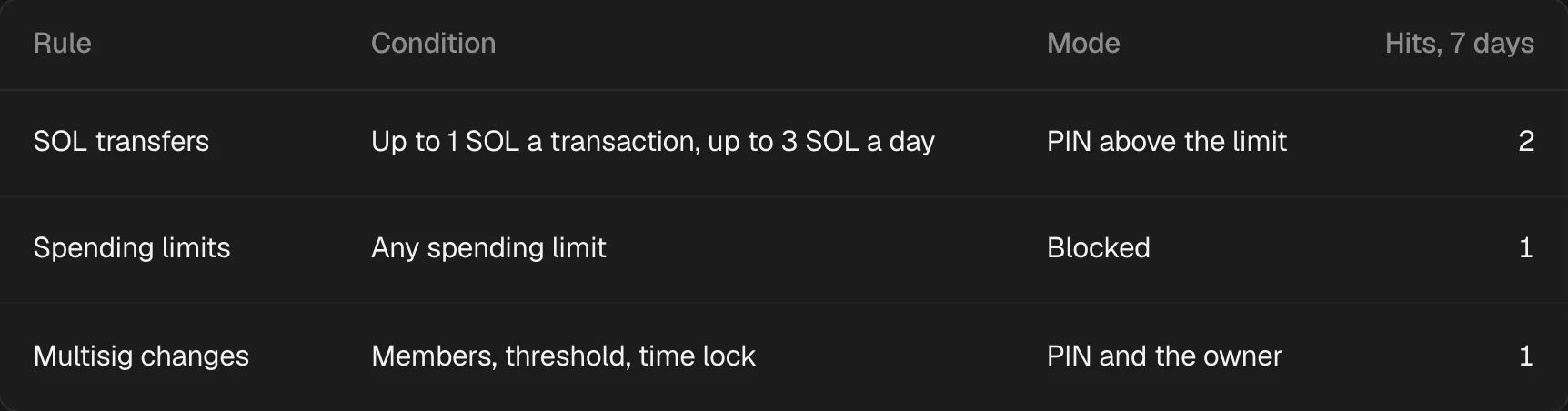
Set your rules once. Settlin applies them to every proposal, however convincing it looks.
Inside your limits, to addresses you trust. Settlin executes it on its own.
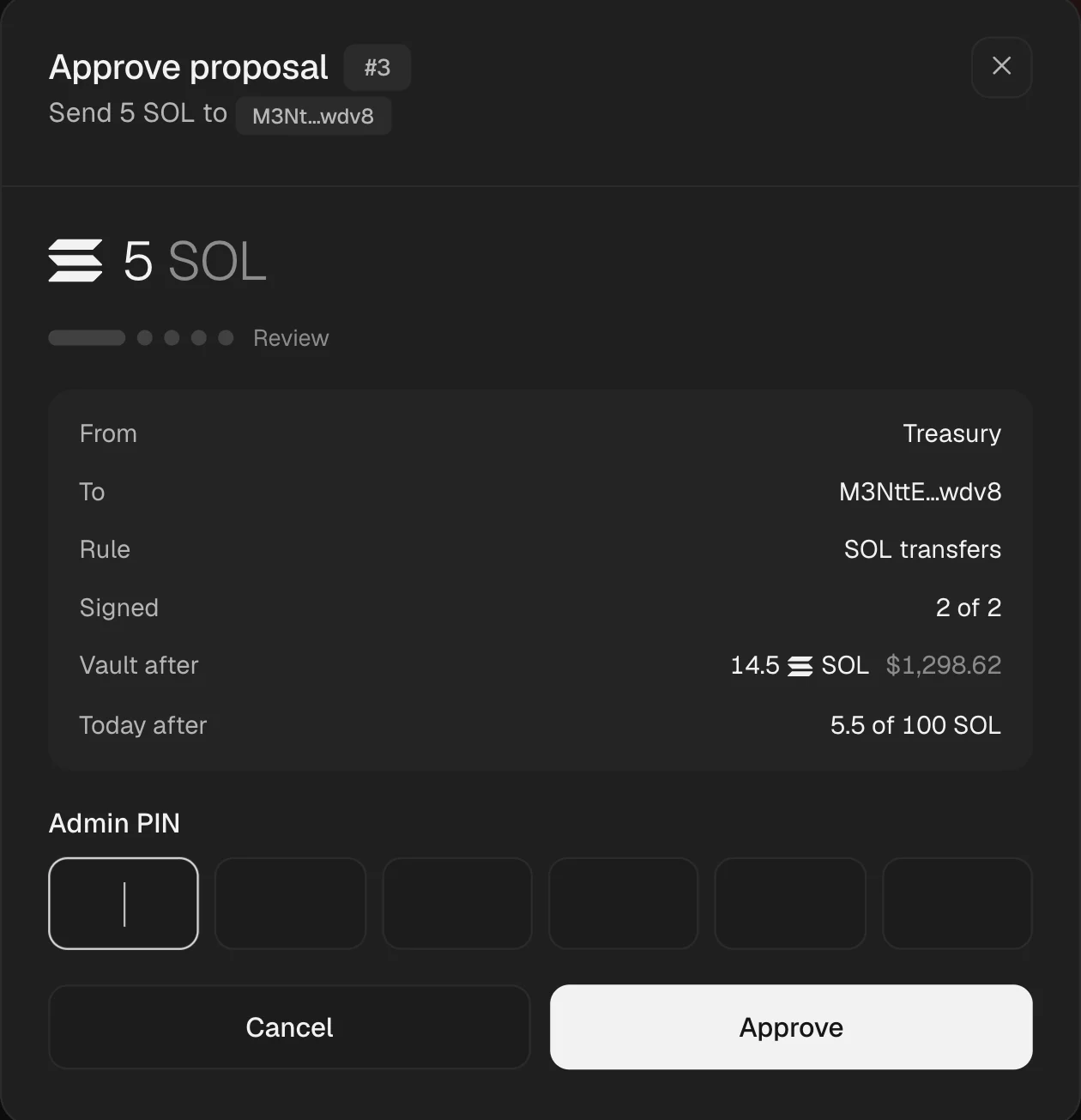
Over a limit or out of the ordinary. Nothing moves until an admin approves it with a PIN.
Spending limits, unknown delegatecalls, anything Settlin can’t read. It doesn’t matter how many people signed.
stop here
The dashboard your admins use to read, release and freeze. Shown here with sample data.
Chains: Ethereum, Arbitrum, Base, Optimism, Polygon, BNB Chain, Avalanche, Gnosis
How it’s wired: A transaction guard set on your Safe
Who can land it: Settlin’s executor
Hard stops: Delegatecalls, gas refunds, malformed token calls
Way out: Signed transactions can run without Settlin after a public delay of 2 to 30 days
Status: Ready to deploy
Chains: Solana
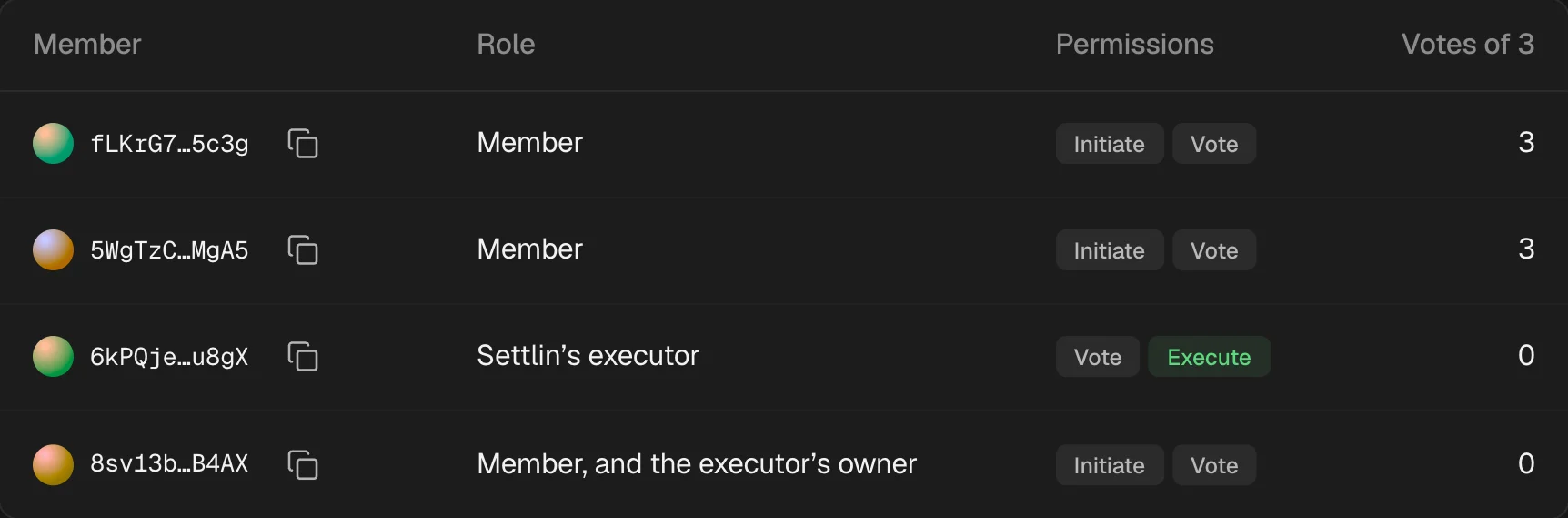
How it’s wired: Settlin’s executor becomes the only member with Execute
Who can land it: Settlin’s executor, a program account with no private key
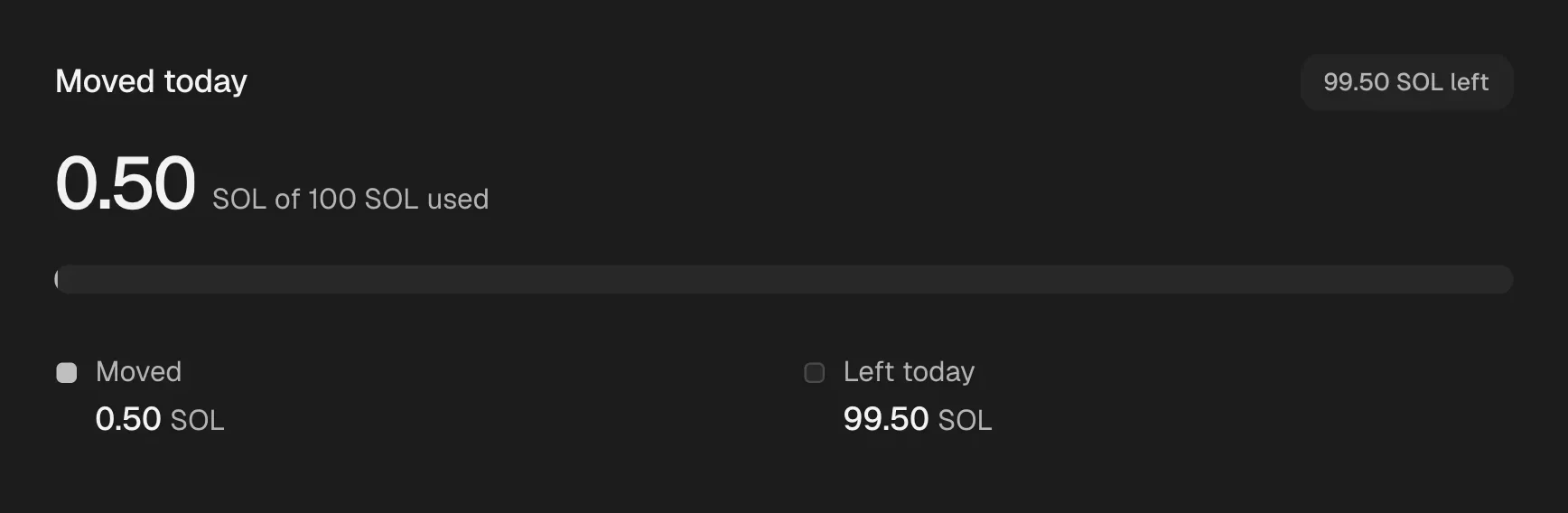
Hard stops: Spending limits, batches, anything it can’t read
Way out: The executor’s owner can appoint another guardian
Status: On devnet, audit pending
Chains: EVM chains
How it’s wired: Risky calls queue behind a delay in your contract
Who can land it: Your contract, once the delay passes and the rules allow it
Hard stops: Anything outside a function’s allowed values
Way out: Members can exit while a guardian change waits
Status: Built for vaults
Settlin never holds a signer’s key. Funds stay in your multisig, and its executor can only run what your members already approved.
Settlin can’t strand a treasury. Every setup has a way to run without it, spelled out above for each chain.
Every decision shows what was checked and who approved it, and anything held or blocked goes straight to your admins’ phones.
In build now. Each one moves into the product as it ships.
Upgrades, authority transfers and member changes wait, and anyone on the team can cancel.
Program upgrades and authority changes called out for what they are, and durable nonces watched.
A second admin above the amount you set.
Slack, Telegram, PagerDuty and webhooks, beside the phone alerts you get today.
One button across every multisig in a protocol.
See exactly what changes before you approve.
A second factor on every release, with backup codes.
Watches your contracts for code changes and risky patterns, and alerts your team when something moves.
No. They keep proposing and signing in Safe{Wallet} or Squads, with the wallets they use today. What changes is who can execute.
No. Funds stay in your multisig and every signer keeps their own key. Settlin’s executor can only run what your members have already approved.
Nothing moves without it, and nothing is stranded. Safe owners can run a signed transaction after a public delay they choose, from 2 to 30 days. On Squads, the executor’s owner can appoint another guardian.
Whatever they approve still has to pass your policy, so anything unusual waits for an admin’s PIN or never runs. On Safe they could announce an escape, but that’s public, takes days and alerts your team, who can reject it first.
A PIN alone does nothing. Every release also needs a signature from an authorized admin wallet, and five wrong tries lock the PIN for 15 minutes.
Not on its own. Settlin stops bad transactions from your multisig and guarded contracts. A bug in a pool contract still needs an audit and monitoring, which is why continuous contract analysis is on the way.
Not yet. An independent audit comes before mainnet. Ask us where it stands and we’ll walk you through the code and the threat model.